

Unique Graphic Tees: How to Choose One That Lasts
Last Updated: November 19, 2026
Quick Summary
To choose unique graphic tees that last, start with your own style rather than trends, then verify the design is original by tracing the artwork to a named source and checking print detail. Confirm fit and fabric before buying, and wash cold inside out to prevent cracking.
- Answer four questions about your closet, palette, wearing occasions, and message before you browse.
- Reverse-image search the artwork to see if it appears on unrelated stores.
- Screen printing suits bold few-color designs, while DTG suits detailed multi-color art and small runs.
- Measure a shirt you already like and compare those numbers to the size chart.
- A $24.99 tee worn 50 times costs about $0.50 per wear.
Table of Contents
- Start With Your Own Style, Not the Trend Page
- How to Tell an Original Design From a Copy
- Print Methods Compared: Screen Print, DTG, and What They Cost
- Fit, Fabric, and Sizing: What to Check Before You Buy
- Graphic Tees for Men: Cuts, Colors, and Layering
- Graphic Tees for Women: Silhouette, Fit, and Styling
- Vintage Graphic Tees: Real Deal or Faded Fake
- Cost Per Wear: Why a $25 Tee Can Beat a $10 One
- Frequently Asked Questions
Start With Your Own Style, Not the Trend Page
Learning how to choose unique graphic tees starts with you, not the algorithm, and the best unique graphic tees begin with your own style. A graphic tee is a garment first and a statement second, and the ones you keep wearing are the ones that match how you actually dress. A shirt tied to your own story tends to outlast a shirt tied to a season.
Here's the trap most shoppers fall into: they buy what's trending, wear it twice, and leave it in the drawer. Trend roundups from Bonfire's 2026 design trend coverage and Printful's 2026 T-shirt trend article point to nostalgic graphics, bubble lettering, varsity styles, and Y2K revivals. All fine looks. None of them tell you whether the shirt fits your body, your wardrobe, or your life.
Building a Personal Style Profile Before You Shop
Answer four questions before you browse:
- What do you already reach for? Open your closet. The tees you wear most reveal your real style.
- What's your palette? Count the colors you actually wear. Stick to two or three.
- Where will you wear it? Work, weekends, outdoors, or nights out. Each setting has a different ceiling on boldness.
- What do you want it to say? Humor, heritage, hobby, or attitude. One clear message beats three competing ones.
If you're still shaping that profile, our guide on how to wear your attitude on every outdoor adventure shows how clothing choices carry a personal story into the real world.
How to Tell an Original Design From a Copy
An original design is one created by the brand selling it, with artwork you can trace to a named source and a print that holds detail up close. A copy is a lifted image, often slightly altered, printed cheaply and sold without credit. Most shoppers never check, which is why copied graphics circulate so widely.
Treat originality as a verification process, not a vibe. Work through four checks before you buy.
1. Trace the Artwork to a Named Source
Start with the product page. Look for a designer or artist credit, a stated inspiration, and photos of the actual print rather than a flat mockup. A legitimate independent brand usually names the artist or explains the concept. If the listing says only "vintage graphic" or "retro design" with no attribution, that is a signal, not a guarantee.
Reverse-image search the artwork. Crop the graphic tightly and run it through a reverse-image tool. If the same image appears on five unrelated stores with different brand names, it is almost certainly a copy. If it traces back to one artist's portfolio or one brand's lookbook, you have a source.
2. Check Licensing and Attribution Language
Licensed designs, band logos, movie stills, sports marks, cartoon characters, should carry clear licensing language or an official partnership mention. Unlicensed sellers often use slightly altered versions of protected marks to avoid detection. Look for a copyright or trademark line on the product page or hang tag. A common pattern is that mass-produced copies strip the credit line entirely.
For independent art, check whether the brand credits the artist on the product page, in an "about" section, or on social media. A brand that consistently names its collaborators is easier to trust than one that never does.
3. Compare Print Detail Against the Source File
Zoom in on product photos and look for these signals:
- Clean edges. Crisp lines, no blur or pixelation.
- Consistent ink coverage. No thin patches or uneven fill.
- Balanced placement. The print sits centered and level on the chest or back.
- Detail that survives. Fine lines and small text stay readable.
A copy is often reproduced from a low-resolution screenshot, so fine lines blur and small text becomes illegible. If the listing shows only a flat digital mockup and no photo of the actual printed shirt, ask for one or buy elsewhere.
4. Distinguish Independent Work From Mass-Produced Designs
Independent designers tend to show process: sketches, studio photos, limited runs, and a consistent visual voice across their catalog. Mass-produced operations tend to show a large catalog of unrelated styles, generic model photos, and no named creator. Neither pattern is proof on its own, but together they point clearly in one direction.
Watch out: a high price is not evidence of originality. Copies are sometimes priced like originals to seem legitimate, so rely on attribution and print detail rather than price.
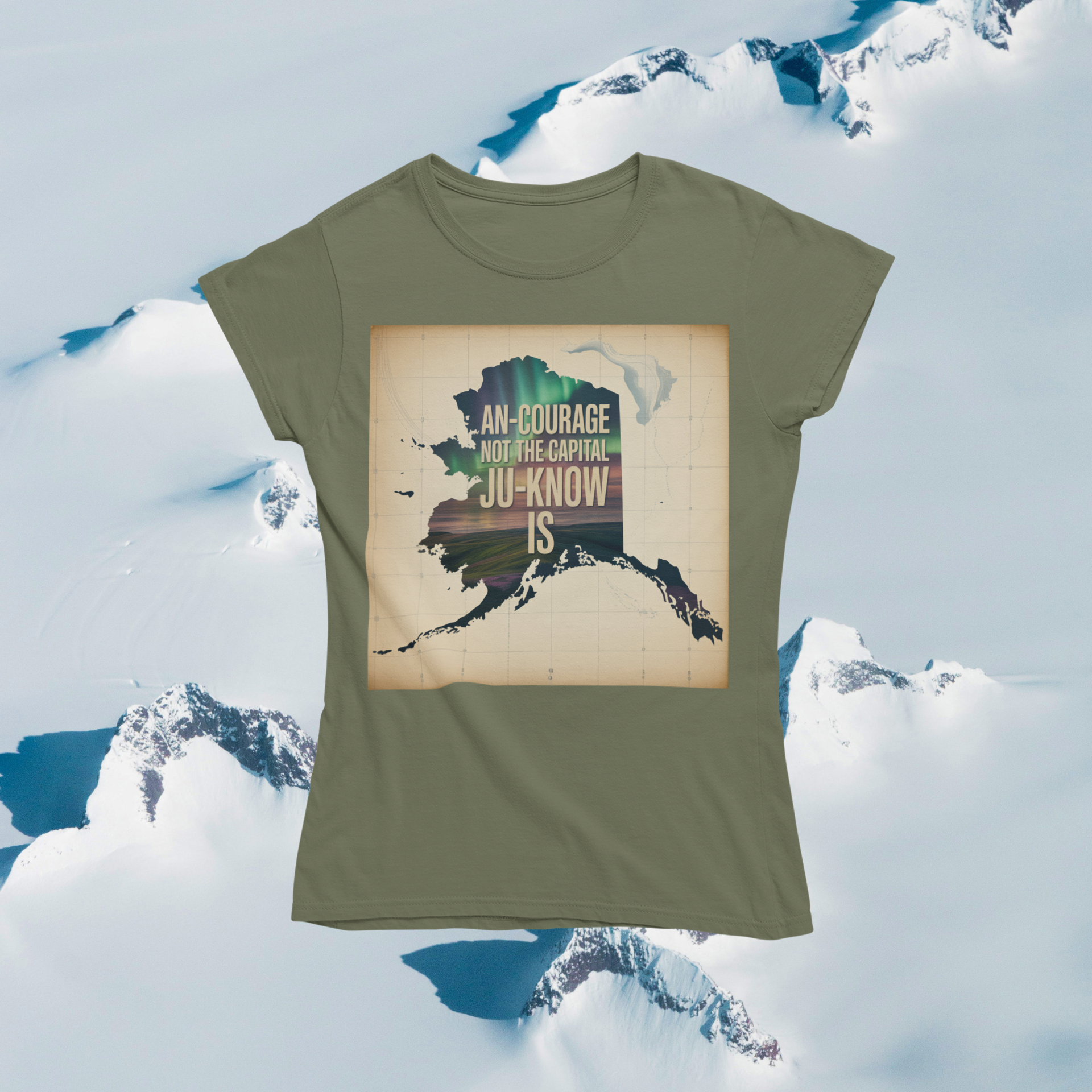
Our An-Courage Rustic Minimalist Edition T-Shirt is a good example of what to look for: a single, deliberate concept with clean execution rather than a busy collage.
Print Methods Compared: Screen Print, DTG, and What They Cost
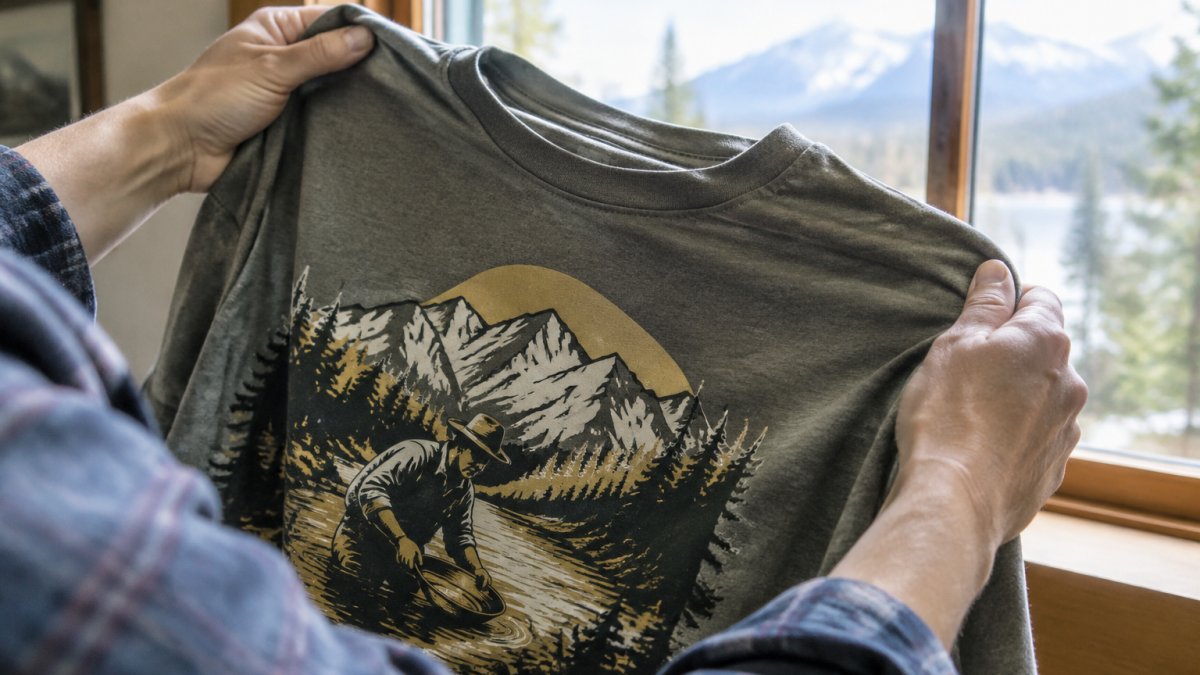
Screen printing pushes thick ink through a mesh stencil, one screen per color. It produces bold, opaque graphics and rewards bulk orders. Direct-to-garment (DTG) printing sprays water-based ink directly onto the fabric, which suits detailed, full-color art and small runs. Both can last years with proper care.
| Method | Best For | Feel | Cost Pattern | Weak Point |
|---|---|---|---|---|
| Screen print | Bold, few-color designs; bulk orders | Thicker ink layer | Cheaper per unit at volume | Setup cost per color |
| DTG | Detailed, multi-color art; small runs | Soft, sinks into fabric | Higher per unit at low volume | Can fade faster on dark shirts |
| All-over print | Full-shirt patterns | Lightweight | Varies by run size | Seams break the pattern |
How to Prevent Graphic Tee Prints From Cracking
Most cracking comes from heat and friction, not bad luck. Wash cold, turn the shirt inside out, skip the dryer or use low heat, and never iron directly over the print. Detergent buildup and rough washing machine cycles also wear down the ink layer over time.
For a deeper breakdown of causes and fixes, read our guide on why graphic T-shirt prints crack and how to fix it.
Fit, Fabric, and Sizing: What to Check Before You Buy
Fit and fabric decide whether a tee gets worn weekly or never. Use this checklist on the product page and, when possible, in person.
Fabric Weight and Content
Fabric weight is usually listed in ounces per square yard (oz/yd²) or grams per square meter (gsm).
Check the fiber content, not just the weight. The Chaos in Boots designs are listed as soft, lightweight premium cotton.
Seams, Stitching, and Construction
Turn the shirt inside out to check the label and seams. The catalog lists a tear-away label for a no-itch experience.
Print Method and Colorfastness
Check the listing for the print details and care instructions. The catalog describes a durable, fade-resistant print on its tees.
Shrinkage and Sizing
Measure a shirt you already like, chest width, body length, and sleeve length, and compare those numbers to the size chart rather than guessing from S, M, L labels.
The classic unisex fit is true to size, per the product listings.
Watch out: a size chart measured on a flat garment is not the same as body measurements. Always compare garment-to-garment, not body-to-garment.
Worried about shrinkage after the first wash? Our article on whether custom graphic tees shrink covers what to expect by fabric type.
Graphic Tees for Men: Cuts, Colors, and Layering
For men, a regular or classic cut in a neutral base color with one strong graphic is a simple starting point. Fit matters more than the print. Layer a graphic tee under an open flannel or denim jacket when the design is loud, and wear it alone when it's clean and minimal.
Color strategy is simple. Match the graphic's dominant color to your pants or shoes, and keep everything else quiet. Two colors in the outfit, one statement.
Graphic Tees for Women: Silhouette, Fit, and Styling
Silhouette drives how a graphic reads. A relaxed unisex fit gives an easy, tomboy feel, while a fitted or cropped cut sharpens the shape. High-waisted jeans, a half-tuck, and a knot at the hem all change the line without changing the shirt.
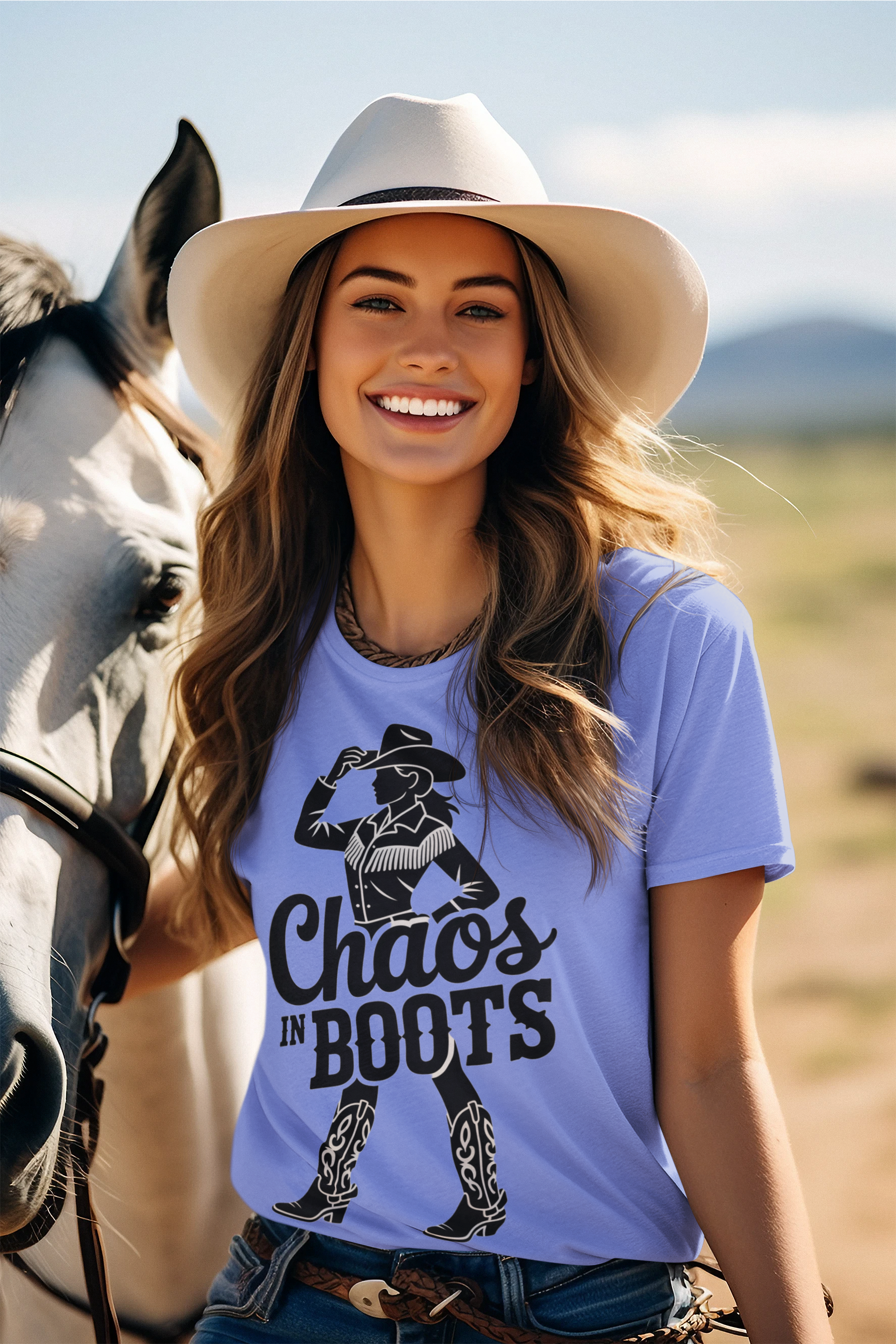
Bold western and frontier graphics pair well with denim, leather, and boots. The Chaos in Boots Cowgirl Grit T-shirt is a bold statement piece with a soft, lightweight cotton feel and a durable, fade-resistant print.
Vintage Graphic Tees: Real Deal or Faded Fake
Real vintage graphic tees show honest wear: softened cotton, single-stitch hems on older pieces, cracked but intact ink, and a tag that matches the era. Fakes are usually new shirts distressed on purpose, with uniform fading and modern blank tags.
Check the tag, the stitching, and the print texture. Intentional distressing looks even; real age looks random. If a seller can't tell you the era or the maker, treat it as a reproduction.
Cost Per Wear: Why a $25 Tee Can Beat a $10 One
Cost per wear is the price divided by the number of times you wear it. A $24.99 tee worn 50 times costs about $0.50 per wear.
That math rewards three things: a design you genuinely love, a fabric that survives washing, and a fit you'll repeat. Made-to-order apparel is produced after you order, so each purchase is a deliberate choice.
The real challenge isn't finding a graphic tee. It's finding one that still looks sharp after a season of wash cycles and still says something true about you. That's what we build at AK-GAL DESIGNS: made-to-order graphic apparel with Alaskan-inspired frontier designs, soft lightweight cotton, tear-away labels, and fade-resistant prints, shipped fast with secure checkout. Start with a design that matches your own story, and let the cost per wear prove it.
Frequently Asked Questions
How can you tell if a graphic tee is good quality?
Flip it inside out and check three things: the fabric weight and feel, the print edges, and the stitching. A good tee has soft, dense cotton with no thin spots, a print that sits smooth against the fabric with crisp edges, and double-stitched hems. Also read the care label. A shirt that says machine wash cold and inside out is telling you the print needs protection, which is normal for durable prints. If the print feels like a thick plastic sheet that cracks when you fold it, expect it to break down fast.
How do you keep graphic tee prints from cracking?
Wash cold, turn the shirt inside out, and skip the dryer or use low heat. Heat is what breaks down the print bond, so hot water and a hot dryer cycle are the two biggest causes of cracking. Skip bleach and fabric softener, which weaken the print layer. Hang dry when you can. The AK-GAL tees feature a durable, fade-resistant print on soft, lightweight premium cotton.
Are graphic tees still in style?
Yes. Trend roundups for 2026 highlight nostalgic designs, bubble lettering, varsity styles, punk-metal looks, food art, Y2K graphics, humorous designs, and animal and nature themes. The style that works is the one that fits your personal style and the rest of your outfit, not whatever tops the trend list that month.
How do I find unique graphic tees that do not look mass-produced?
Shop independent designers and niche brands instead of big-box racks, and look for designs tied to a real story or experience. Check whether the artwork has detail you can zoom into, whether the brand shows the design on multiple products, and whether the print placement is intentional. Verify originality by reverse image searching the design and reading the brand's about page for the artist or source behind it.

Leave a comment